"Suddenly it hit me, what these men were doing," my aunt explained. "I stood up, walked out of that room, and told myself that I'd never go back again, and boom, that was it. I never did. It was so easy."
My aunt spent years in a large, well-known cult. She left a few times, but always felt guilty, due to the brainwashing she had gone through, and went back to them. I was talking with her the other day, and she was explaining how she finally was able to break free. She had spent a couple years of independence from the cult, but felt guilty and contacted the leaders of her particular church again to ask about rejoining. These men told her she had to come in and be interviewed by them, to see if she was worthy and had repented adequately, to be allowed back into the fold. They interrogated her for over two hours, asking her about every detail of what she had done while she was away from them. They were especially interested in her sex life, asking for minute details on every move.
At first, she was ashamed and so desperate for their approval (which they had managed to conflate with the approval of God), she gave them everything they asked for. But at some point at near the end of the conversation, for reasons mysterious even to her, she suddenly just saw what was going on. She saw the reality of the spiritual and emotional abuse, and she saw the greed, lust, and authoritarianism of the men who were trying to control her. Boom. The revelation hit her with such force, it filled her with the strength to do what she had not been able to do before--leave the church forever. It was so easy, once she had that revelation. But she didn't work for it or try to make it happen. Her intent originally was actually to go back to the church. But suddenly -- boom -- awakening. Where did this come from?
Let's call it grace. (Kind of a funny term for this story, since my aunt is an atheist now, and the term "grace" is usually assumed as coming from God. Funny!)
I had a similar experience, but on a much smaller scale. I bought my first car when I was 16, and it was a beater. There were always things breaking down on it, and my parents were the type to make me pay for my own expenses (which I think is a great lesson and plan to raise my kids the same way). Money was always tight, though. Eventually i developed a pretty strong anxiety about the car and especially the money around the car. I had several quite large (for me) car repair expenses pop up over the course of my high school and college years, and they were hard for me to deal with. I bought books about car repair, to try to assuage my anxiety, so that I could feel like I knew what the mechanics were talking about and that I wouldn't be taken advantage of.
There was one time, I think it was shortly after I graduated college, when I got news of a car repair needed, and I was worried about how I was going to pay for it. I was driving down the road, worrying, trying not to worry, trying to think, trying to pray, when suddenly out of nowhere--boom-- an incredible peace. It was like a voice filled my entire body and mind, "Don't worry about the car. It's going to be fine, and you'll always be able to afford it." It was like a huge weight on my shoulders just dissolved, and I knew everything was going to work out. The anxiety was completely gone.
Ever since then, I haven't had anxiety around my car issues. Things come up, and I'm able to handle them. Not always easily, of course. Large repairs have still come up to be dealt with. Decisions have to be made. Insurance is a convoluted mess. I have duct tape holding my rear bumper on at the moment. But I'm just not worried about it. I'm able to achieve the right balance of spending the cognitive effort required to handle car issues, without falling into anxiety.
The thing is, I totally can't take credit for this, except that I'm a responsible adult who does adult things like buying insurance and maintaining a car. I mean the anxiety part. The release from that was just plopped into my lap out of nowhere. Boom. Gone. "Don't worry about the car," and I never did ever again. I didn't have to try not to worry. I didn't go through any kinds of rituals to release the worry or cope with it better. I just didn't worry about it anymore. It was 100% a gift. From where? Who can say? Grace.
I'm grateful for this. There have been a few other flashes of grace I've experienced, including a physical healing, and they are amazing when they happen. I know several other stories of other people experiencing these powerful flashes of grace, and they are inspiring to hear.
But I also find them problematic as well. Why are they so rare? Why do we have to struggle with so many things, while others are just handed to us? Why do some people experience more grace than others? Is there actually a formula to these flashes, that we all just accidentally used without knowing it... Could we find a way to force them to happen? What's going on?
If grace were coming from an intelligent consciousness of some kind, that consciousness would have to be an evil one, like an abusive parent or partner. The vast majority of people who commit emotional abuse are not awful and cruel 100% of the time. It is actually more cruel to be sometimes kind and warm, and other times terrible, because it confuses the victim and takes away more of their power. If you're horrible all the time, people can predict what's going to happen, and have a measure of control over their lives. It's much worse to be cruel only some of the time, and make those times random.
A consciousness powerful enough to provide support and relief for life's problems, but only does it some of the time, is not a good one. Aaaannnnd, we're getting into theodicy again...
Back to grace. What's going on? Is it something related to alternate universes and boundaries on how far alternate realities are allowed to branch out? Alignment of the stars? A higher self or unconscious deep mind? Wouldn't it be great to know?

Showing posts with label free will. Show all posts
Showing posts with label free will. Show all posts
Saturday, December 31, 2016


Tuesday, August 16, 2016
My friend Chuck
I just got the news that my friend Chuck committed suicide. This is a truly tragic loss. I am in shock and grieving.
Part of the grieving process is feeling guilty. I knew he was going through a difficult time, but I wasn't as available as I should have been and wanted to be. I spoke to him a couple months ago, and meant to stay in touch. I thought of him several times the past few weeks, and intended to call, but I didn't call. Why didn't I call? I let my own worries and life distractions prevent me from calling. I wish I had called. It might have prevented it, it might not have, but at least he would have known, in his last moments, that I cared about him.
Part of the grieving process is anger. But it's mostly anger at the systems and the people who tormented him and drove him to take this final action. His wife for being really nasty in the divorce process and alienating him from his kids, who were his life's joy. The legal system that makes divorce 100 times harder than it should be and allows people to torment other people. Our fake, materialistic culture that punishes creative and moral souls while rewarding those who are shallow and egotistical. Our mental health system for over-relying on drugs and profit while neglecting the human and compassionate approaches to treatment. The American economy that doesn't look out for the weak or for people down on their luck. The American Evangelical Christian culture of judgmentalism and brainwashing, creating presumed insiders and outsiders to God's love. (I shudder to think what those horrible, evil church people are telling his beautiful children. "Because your daddy didn't accept Jesus in his heart, he is now burning in hell!" Those idiotic, narrow-minded, nasty, brainwashed people! They have absolutely zero concept of true spirituality or the nature of God!) I know Chuck made a choice, and the ultimate responsibility is on him. I'm sure he regrets it now. But I'm not angry at him. He had a terrible moment of weakness. I'm angry at everything that drove him to feeling that he couldn't cope anymore.
I'm also a wee bit jealous, to be honest. His suffering and struggles are over. He can find peace now. I know it's terrible to say it, because this means his adorable children will suffer horrifically from losing him. There's nothing that will make that easier or better or right. But as far as Chuck is concerned, he is in a better place. He doesn't have to struggle to find money, to find shelter, to shush the voices tormenting his mind, to worry about the legal strategies for getting to see his kids again, to worry about pleasing a boss or clients, or worry about anything else.
I can't afford to travel to Chicago to attend his funeral, and I'm feeling helpless to do anything to alleviate the situation. I don't know his family or most of his friends to be able to commiserate. Chuck and I met through the online Atheism for Lent course, and have been good, distant, online friends ever since, but our daily-life circles didn't cross. I don't have money to contribute to the gofundme account for his children. I can't do anything.
I can't do anything, but I can honor the person he was, at least in my own small way.
I knew him as a truly good man. He was a devoted and caring father, and a survivor who overcame horrors most of us would be decimated by. Despite all the difficulties in his life, his intelligence, creativity, wit, and profound morality shone through. He was wise and self-aware. He had not only a deep mental intelligence, but keen emotional intelligence as well. He was not afraid to express his feelings, which is a rare trait for a man in today's world.
Physically, he was gentle and unimposing in appearance. But mentally he was formidable. His knowledge on a host of subjects was vast, and his ability to navigate complicated philosophical subjects with deft ease was simply amazing. I looked up to his intelligence, and greatly admired his ability to express it. And yet, unlike many whose intelligence is far to the right on the bell curve, he was compassionate and never arrogant. He would put you in your place if you needed it, but he never did so just to feel superior or to boost his ego. He cared about truth and beauty and morality and experience, and was never shallow enough to play any kind of ego games.
Chuck also had great insight into the human psyche. He was a playwright, and his plays he gave me the honor of reading explored tapestries of emotions without ever approaching either melodrama or kitsch. He practiced meditation and non-judgmental, body-based emotional processing, and was not afraid to share his feelings openly with his friends.
The world is truly a worse-off place without Chuck to brighten it. I miss him, and wish I could have at least said good-bye.
Part of the grieving process is feeling guilty. I knew he was going through a difficult time, but I wasn't as available as I should have been and wanted to be. I spoke to him a couple months ago, and meant to stay in touch. I thought of him several times the past few weeks, and intended to call, but I didn't call. Why didn't I call? I let my own worries and life distractions prevent me from calling. I wish I had called. It might have prevented it, it might not have, but at least he would have known, in his last moments, that I cared about him.
Part of the grieving process is anger. But it's mostly anger at the systems and the people who tormented him and drove him to take this final action. His wife for being really nasty in the divorce process and alienating him from his kids, who were his life's joy. The legal system that makes divorce 100 times harder than it should be and allows people to torment other people. Our fake, materialistic culture that punishes creative and moral souls while rewarding those who are shallow and egotistical. Our mental health system for over-relying on drugs and profit while neglecting the human and compassionate approaches to treatment. The American economy that doesn't look out for the weak or for people down on their luck. The American Evangelical Christian culture of judgmentalism and brainwashing, creating presumed insiders and outsiders to God's love. (I shudder to think what those horrible, evil church people are telling his beautiful children. "Because your daddy didn't accept Jesus in his heart, he is now burning in hell!" Those idiotic, narrow-minded, nasty, brainwashed people! They have absolutely zero concept of true spirituality or the nature of God!) I know Chuck made a choice, and the ultimate responsibility is on him. I'm sure he regrets it now. But I'm not angry at him. He had a terrible moment of weakness. I'm angry at everything that drove him to feeling that he couldn't cope anymore.
I'm also a wee bit jealous, to be honest. His suffering and struggles are over. He can find peace now. I know it's terrible to say it, because this means his adorable children will suffer horrifically from losing him. There's nothing that will make that easier or better or right. But as far as Chuck is concerned, he is in a better place. He doesn't have to struggle to find money, to find shelter, to shush the voices tormenting his mind, to worry about the legal strategies for getting to see his kids again, to worry about pleasing a boss or clients, or worry about anything else.
I can't afford to travel to Chicago to attend his funeral, and I'm feeling helpless to do anything to alleviate the situation. I don't know his family or most of his friends to be able to commiserate. Chuck and I met through the online Atheism for Lent course, and have been good, distant, online friends ever since, but our daily-life circles didn't cross. I don't have money to contribute to the gofundme account for his children. I can't do anything.
I can't do anything, but I can honor the person he was, at least in my own small way.
I knew him as a truly good man. He was a devoted and caring father, and a survivor who overcame horrors most of us would be decimated by. Despite all the difficulties in his life, his intelligence, creativity, wit, and profound morality shone through. He was wise and self-aware. He had not only a deep mental intelligence, but keen emotional intelligence as well. He was not afraid to express his feelings, which is a rare trait for a man in today's world.
Physically, he was gentle and unimposing in appearance. But mentally he was formidable. His knowledge on a host of subjects was vast, and his ability to navigate complicated philosophical subjects with deft ease was simply amazing. I looked up to his intelligence, and greatly admired his ability to express it. And yet, unlike many whose intelligence is far to the right on the bell curve, he was compassionate and never arrogant. He would put you in your place if you needed it, but he never did so just to feel superior or to boost his ego. He cared about truth and beauty and morality and experience, and was never shallow enough to play any kind of ego games.
Chuck also had great insight into the human psyche. He was a playwright, and his plays he gave me the honor of reading explored tapestries of emotions without ever approaching either melodrama or kitsch. He practiced meditation and non-judgmental, body-based emotional processing, and was not afraid to share his feelings openly with his friends.
The world is truly a worse-off place without Chuck to brighten it. I miss him, and wish I could have at least said good-bye.
Friday, June 27, 2014
A landmark debate: Modern vs. Traditional Astrology
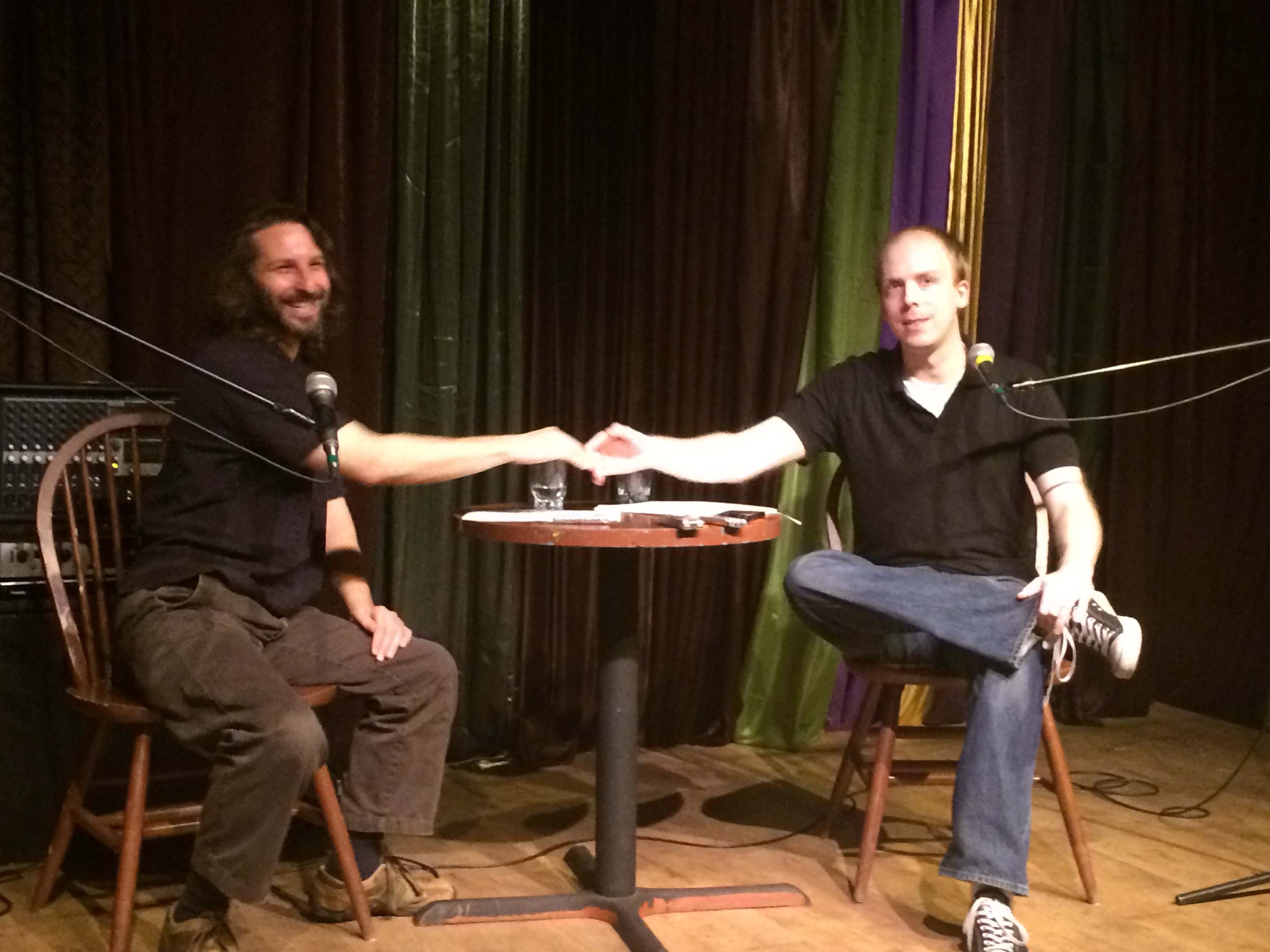
Recently there was a debate between Chris Brennan and Eric Meyers on the topic of "Modern vs. Traditional Astrology" that has been making waves in the astrological community. This is a big deal. You will want to listen to this if you care about astrology.

I'm posting my comments on the debate here.
The first thing I need to say is that I'm not a professional astrologer, and am not trained in any kind of advanced techniques for analyzing an astrological chart. I know some basics, and am interested in the field, so I cannot comment on the efficacy or usefulness of any particular technique mentioned in the show. My comments are mainly philosophical.
Unfortunately, I'm mostly going to have to pick on Meyers in this post. He did a lot of interrupting and steam-rolling, and Brennan wasn't able to get a lot of words in edgewise, so there's more to pick on.
The first and overarching fallacy Meyers engaged in was appealing to quantum theory as a way of trying to prove his spiritual beliefs as objectively true. This is common in New Age circles. They watch the documentary What the Bleep Do We Know Anyway?, and maybe read a few articles about some basic principles of quantum physics, and they jump to conclusions about the applications of this science, namely, the conclusions that Quantum Theory proves their spiritual beliefs.

I have two friends who are actually familiar with the field of QT--one, Charles S., is a brilliant computer scientist and pianist, the other, Eric F.-L., is a math professor at Benedictine College. Neither of them are likely to be into astrology, but I asked them a bit about Quantum Theory, and one thing they made sure to emphasize is that there's a difference between the scientific theory, proper, and the varying interpretations of the theory. With their permission, I'm copying part of our conversation (emphases mine):
In other words, Quantum Theory can be used for scientific purposes, but it cannot teach us about spiritual truths. Unfortunately, we still have to rely on revelation for that. And, equally unfortunately, without hard proof we may still have to disagree about which spiritual revelations are actually true.
Meyers' spiritual culture teaches him that all of life is a dream, and we are all projecting our own beliefs and realities into the dream scape, and attracting situations, people, and events to our lives that will teach us spiritual lessons.
My spiritual beliefs do not align with his. I disagree with him, quite strongly, on some points. But I can't use quantum physics or any other scientific theory to prove him wrong; likewise, he cannot use quantum physics or any other scientific theory to prove me wrong.
Brennan is probably not an expert in scientific fields (and I highly doubt Meyers is either), so he didn't call Meyers on this point, but if he had done so, it would have changed the entire debate. That was the one card Meyers kept pulling, the foundation he tried to build everything else on, and it was a terribly weak foundation.
The next point I want to make is that it would be useful to distinguish between spiritual consciousness and cognition. I'm not sure if Meyers was trying to equate them when he brought up the idea of giraffe and spider charts compared to human charts, or if he was just using a metaphor. Either way, there are problems.
If he meant to say that the main difference between a human and a giraffe is the level of consciousness (and presumably he'd assert that human consciousness is "higher" than a giraffe's), and if he's equating consciousness with cognition, then the logical conclusion would be that with enough spiritual practice, a giraffe could eventually achieve the consciousness of a human. Also, if he is equating consciousness and cognition, and if a lower level of consciousness means a "darker manifestation" of the chart's energies (attracting negative energies and situations,) then all animals, due to being "lower" in consciousness than humans, would consistently live in "dark" energies and manifestations.

If he meant to use cognition as a metaphor for spiritual consciousness, then the metaphor is a poor one. The problem is, Meyers asserts that self will is the major factor in spiritual development, but it's a fact that the development of cognition is largely out of our control. Though there is much variation, humans (all animals, actually) go through fairly predictable stages of cognitive development, and many, of not all, of these are directly influenced by biological developments (brain, hormones, etc.) A two year old doesn't wake up one day and decide to start talking, to control her bladder, or to explore everything she sees. These things are natural parts of normal human development. Free will plays a part in the process, but the bulk of cognitive development seems to be predetermined by genetics and environment. If spiritual maturity is being compared to cognitive maturity, why would spiritual development be completely a matter of free will, when cognition is not?

In any case, what does this have to do with astrology? I'm certain that there's no astrologer out there who will say that everything about a person's life can be explained by astrological factors. (As far as I know, a person's chart can't even reveal the gender of the native, which is obviously a huge part of a person's identity.) Brennan wasn't saying that astrology explained a 100% mechanistic and fatalistic universe, but that seemed to be the strawman that Meyers was attacking when he tried to discredit traditional astrology.
If you want to hold certain spiritual beliefs as an astrologer, that's completely fine, but you can't use your spiritual beliefs (which are, by definition, unprovable) to deny that certain astrological techniques, which can be (more or less) proven, actually work. Actually, Meyers doesn't seem to be doing that; he's doing something worse. He's using his spiritual beliefs as an excuse not to even investigate whether certain astrological techniques work. As the old expression goes, the only thing preventing you from finding truth is the belief you've already found it.
This blog post is getting pretty long. Though I have so much more to say, I'll close by stating what, if I were in the audience that night, I would have asked Meyers and Brennan during the Q&A after the debate.
To Mr. Meyers: According to what you've said tonight, people "attract" situations that they judge as "negative" to them in order to learn spiritual lessons. If a person is more spiritually enlightened, conscious, mature, or whatever the word you want to use, then they will attract less darkness and more light, and, presumably, suffer less. Therefore, by your logic, what's been called "the 1%" in the USA, the richest people, who have considerably less suffering than the rest of us, should be the most spiritually-awakened individuals in the world. This is known as a "just-world" viewpoint, that people get what they deserve. Do you really want to defend this viewpoint?
To Mr. Brennan: You mentioned that the Tradition should be adaptable to the culture it finds itself in, and techniques and such can be modified to fit the needs of new situations. That you use Uranus, Neptune, and Pluto is one testimonial to your flexibility. How, though, do you think traditional astrology, which is rooted in such patriarchal and somewhat rigid cultures, can be reconciled faithfully with today's increased social mobility, feminism, globalism, and other such sensibilities of today's culture?
I'm posting my comments on the debate here.
The first thing I need to say is that I'm not a professional astrologer, and am not trained in any kind of advanced techniques for analyzing an astrological chart. I know some basics, and am interested in the field, so I cannot comment on the efficacy or usefulness of any particular technique mentioned in the show. My comments are mainly philosophical.
Unfortunately, I'm mostly going to have to pick on Meyers in this post. He did a lot of interrupting and steam-rolling, and Brennan wasn't able to get a lot of words in edgewise, so there's more to pick on.
The first and overarching fallacy Meyers engaged in was appealing to quantum theory as a way of trying to prove his spiritual beliefs as objectively true. This is common in New Age circles. They watch the documentary What the Bleep Do We Know Anyway?, and maybe read a few articles about some basic principles of quantum physics, and they jump to conclusions about the applications of this science, namely, the conclusions that Quantum Theory proves their spiritual beliefs.
https://flic.kr/p/7bCCg8
I have two friends who are actually familiar with the field of QT--one, Charles S., is a brilliant computer scientist and pianist, the other, Eric F.-L., is a math professor at Benedictine College. Neither of them are likely to be into astrology, but I asked them a bit about Quantum Theory, and one thing they made sure to emphasize is that there's a difference between the scientific theory, proper, and the varying interpretations of the theory. With their permission, I'm copying part of our conversation (emphases mine):
C: Actually, quantum mechanics is one of the most solid theories out there as far as the math goes. It has a staggering amount of evidence backing it up, and as far as the math goes, it's one of the best theories out there in terms of predictive power, and it has plenty of solid conclusions.
The problem with quantum mechanics is that it's weird, and doesn't seem to make intuitive sense. It's extremely accurate, and if you do the math, you get the right results, but very few people completely understand it, which allows other people to abuse it to justify whatever pseudoscientific beliefs they like and generally get away with it.
Me: Pretty sure you can't use quantum theory to "prove" that there is no objective reality, and we are all creating the illusion of the universe as we go along, as the New Agers are trying to say?
E: That's right -- you can't use quantum theory to prove there is no objective reality. As Charles said, the math is solid, but as for the interpretation, there are many competing ideas. The idea that sentient observers create their own reality is certainly not a necessary part of quantum theory (in fact, you'd be hard pressed to come up with an interpretation that consistently includes the idea of creating your own reality, since everyone's realities have to agree).
C: That kind of thing would fall under the umbrella of the pseudoscientific beliefs that I was referring to. Well, there's the MWI, in which there are many different realities that don't necessarily all agree with each other. That still doesn't mean you create your own reality, though, especially since in MWI, it's hard to figure out what "you" would even mean. Also, MWI, like most interpretations of QM, is hard to call scientific, since so far no one's thought of any way to test it other than the quantum suicide experiment, which would only produce valid results for the person who was doing it.
E: yeah, many worlds was the only one I could think of where a "create your own realities" philosophy might be possible, but as you said, even that would be pretty shady.
In other words, Quantum Theory can be used for scientific purposes, but it cannot teach us about spiritual truths. Unfortunately, we still have to rely on revelation for that. And, equally unfortunately, without hard proof we may still have to disagree about which spiritual revelations are actually true.
Meyers' spiritual culture teaches him that all of life is a dream, and we are all projecting our own beliefs and realities into the dream scape, and attracting situations, people, and events to our lives that will teach us spiritual lessons.
My spiritual beliefs do not align with his. I disagree with him, quite strongly, on some points. But I can't use quantum physics or any other scientific theory to prove him wrong; likewise, he cannot use quantum physics or any other scientific theory to prove me wrong.
Brennan is probably not an expert in scientific fields (and I highly doubt Meyers is either), so he didn't call Meyers on this point, but if he had done so, it would have changed the entire debate. That was the one card Meyers kept pulling, the foundation he tried to build everything else on, and it was a terribly weak foundation.
The next point I want to make is that it would be useful to distinguish between spiritual consciousness and cognition. I'm not sure if Meyers was trying to equate them when he brought up the idea of giraffe and spider charts compared to human charts, or if he was just using a metaphor. Either way, there are problems.
If he meant to say that the main difference between a human and a giraffe is the level of consciousness (and presumably he'd assert that human consciousness is "higher" than a giraffe's), and if he's equating consciousness with cognition, then the logical conclusion would be that with enough spiritual practice, a giraffe could eventually achieve the consciousness of a human. Also, if he is equating consciousness and cognition, and if a lower level of consciousness means a "darker manifestation" of the chart's energies (attracting negative energies and situations,) then all animals, due to being "lower" in consciousness than humans, would consistently live in "dark" energies and manifestations.
"Attack of a Vampire Kitty!"
by tanakawho, Flickr
If he meant to use cognition as a metaphor for spiritual consciousness, then the metaphor is a poor one. The problem is, Meyers asserts that self will is the major factor in spiritual development, but it's a fact that the development of cognition is largely out of our control. Though there is much variation, humans (all animals, actually) go through fairly predictable stages of cognitive development, and many, of not all, of these are directly influenced by biological developments (brain, hormones, etc.) A two year old doesn't wake up one day and decide to start talking, to control her bladder, or to explore everything she sees. These things are natural parts of normal human development. Free will plays a part in the process, but the bulk of cognitive development seems to be predetermined by genetics and environment. If spiritual maturity is being compared to cognitive maturity, why would spiritual development be completely a matter of free will, when cognition is not?
In any case, what does this have to do with astrology? I'm certain that there's no astrologer out there who will say that everything about a person's life can be explained by astrological factors. (As far as I know, a person's chart can't even reveal the gender of the native, which is obviously a huge part of a person's identity.) Brennan wasn't saying that astrology explained a 100% mechanistic and fatalistic universe, but that seemed to be the strawman that Meyers was attacking when he tried to discredit traditional astrology.
If you want to hold certain spiritual beliefs as an astrologer, that's completely fine, but you can't use your spiritual beliefs (which are, by definition, unprovable) to deny that certain astrological techniques, which can be (more or less) proven, actually work. Actually, Meyers doesn't seem to be doing that; he's doing something worse. He's using his spiritual beliefs as an excuse not to even investigate whether certain astrological techniques work. As the old expression goes, the only thing preventing you from finding truth is the belief you've already found it.
This blog post is getting pretty long. Though I have so much more to say, I'll close by stating what, if I were in the audience that night, I would have asked Meyers and Brennan during the Q&A after the debate.
To Mr. Meyers: According to what you've said tonight, people "attract" situations that they judge as "negative" to them in order to learn spiritual lessons. If a person is more spiritually enlightened, conscious, mature, or whatever the word you want to use, then they will attract less darkness and more light, and, presumably, suffer less. Therefore, by your logic, what's been called "the 1%" in the USA, the richest people, who have considerably less suffering than the rest of us, should be the most spiritually-awakened individuals in the world. This is known as a "just-world" viewpoint, that people get what they deserve. Do you really want to defend this viewpoint?
To Mr. Brennan: You mentioned that the Tradition should be adaptable to the culture it finds itself in, and techniques and such can be modified to fit the needs of new situations. That you use Uranus, Neptune, and Pluto is one testimonial to your flexibility. How, though, do you think traditional astrology, which is rooted in such patriarchal and somewhat rigid cultures, can be reconciled faithfully with today's increased social mobility, feminism, globalism, and other such sensibilities of today's culture?
Subscribe to:
Posts (Atom)