Welcome!

Thoughts on lots of things, especially education, psychology, culture, religion, and personal growth.
Showing posts with label love. Show all posts

Tuesday, January 24, 2017

Accepting and loving myself

I strive to love myself, and most days I do. I love my unique blend of abilities to think, to feel, to intuit, to attract, to act, and to control.  
Think. Feel. Intuit. Attract. Act. Control.  
These are all vital functions of the psyche.  I could wish for a little more in the intuition and attraction departments, but mostly, I am grateful. Everyone is unique, and everyone has a place in the world. I like how I was made. If anyone tries to change me, I react with scorn and indignation.  I am grateful for who I am!

I do wish I were better at releasing the right functions at the right time.  Sometimes I Think when I should be Feeling, or Act when I should be Intuiting, and so on.  But... I suppose... Who's in charge of "should"? It's a matter of using the function at the right time that gets a result that makes me happy, ultimately. But I am not very good at judging which is the right one for the situation, nor of controlling which one rises up, when. It's like each function has a mind of its own and rises up when it wants to. It often produces awkward moments, where I feel out of place with the world, unsure of myself and unhappy with the results. But even this awkwardness, if it is what it is, is how I was made, and I should love it. I'm doing me. And I'm trying to love it.  Maybe I will get more skilled in regulating and controlling all of these functions as I grow older and keep trying.

The function I have been pondering a lot lately is the Thinking function.  It might be my strongest one.  It's my default.  I am very conscientious--I have a very strong sense of "should," and always strive for what is "right."  I have a firm grasp on reality, and a head for logic.  I am critical and skeptical.  I love this about myself. It keeps me honest, open minded, realistic, consistent, and accurate. It sometimes paralyzes me in over-analysis, which can be annoying. And it sometimes leads me to self-judgement and  harshness, which sometimes leaks out onto others as well.  If people only knew-- as judgmental as I can be of others, I'm 100 times more so with myself. 

So, obviously, this trait can be dysfunctional, but it has a lot of strengths, too. I am an excellent editor. I can figure things out. I can create structures and systems that work flawlessly. I can see through bullshit.  I can discuss intellectual ideas.  
To love my strengths is to remove the poison from them, preventing them from becoming weaknesses. Right? So the theory goes; we shall see. Loving myself. It's no small thing.  Because despite how hard I've tried, my life hasn't been what I wanted.

I do hope I can do better than I have in the past to make the most use out of how I was made. Looking back, I think I have wasted a lot of what I was given, even though I always tried so hard. But I can't change that. Only now counts.  I hope I can learn to be as grateful for my past as I am for the present and for my potentials. 

This is why I react so strongly against someone trying to change me, even slightly. Nobody has the right to control me, and nobody has the capability of, or motivation for, scrutinizing my life as I, myself, already do. Nobody could be more serious about improving my life than I already am, and nobody understands the long string of circumstances and choices that brought me to where I am. Nobody knows more deeply than I do, that in each circumstance that arose in my life, I tried my absolute hardest to do what was right. For anyone to presume that they know better, that they can take over my ability to think, is highly insulting.  Maybe I overreact a bit when it happens, I don't know...

I struggle with the fact that I struggle. It's a weird tension between loving what is and working for making things better.  If I love what is, what motivation do I have to notice injustice, dysfunction, imbalance, and suffering, and to use my gifts to alleviate those things? How do I find the resolution between these two things--resting in what is and working towards what should be? 

And then, how can I both love myself and come to terms with the fact that "me-doing-me" sometimes leads to mistakes, pain, suffering, and injustice? When I am harsh with myself, I know that is violence and ingratitude, but maybe me being harsh with myself is also part of who I am. Why would I shut down part of who I am, if I am supposed to love who I am?  How do I resolve this, grow through it, and hold on to love?

Wednesday, September 21, 2016

exhaustion

I finally unenrolled myself from a couple online mom-forums I've been part of for awhile.  I decided I couldn't take it anymore.  There were many interesting and rewarding conversations along the way, but I think I'm done now.  There are recurring themes that get posted so often that really stress me out, and I'm tired of reading them.

Things like:
  • OMG look at this pee stick. Am I pregnant????  (You'll know for sure in a couple weeks.  Like, it'll be obvious.  You'll have no doubts. Chill the hell out.)
  • Is there a good, part-time work-from-home job I can get that isn't MLM or a scam, and doesn't require me to have a degree? (Nope.)
  • I really want another baby! I'm getting baby fever! (My god. Weren't you just here complaining about how tight money is, like yesterday?  So irresponsible to bring a child into the world if you can't afford to care for it.)
  • Oh golly gosh gee, I accidentally got pregnant, and we can't afford it. How am I going to tell my husband, and what are we going to do? (Um, get an abortion if you don't want to be pregnant. Take control over your life, ffs.)
  • What should we name our baby? (What names do YOU like? Why do you think random strangers on the internet should fucking name your child?)
I don't usually post these responses, because, well, they are considered abrasive.  (I actually like to troll the "name" posts by offering ideas like "name him Bratwurst!  Or I love the name Beelzebub!")  But god, I THINK them, ha ha.  And I'm tired of thinking them and getting mad at people for being dumb, or refusing to take power over their lives, or refusing to think for themselves.  But the one that really makes me furious, and which comes up almost daily is some long, rambling, frustrated narrative that basically boils down to this:

I'm so exhausted.

I'm not mad that women are exhausted!  Far from it.  I'm mad because the vast majority of the time, these women have husbands or boyfriends they are living with.  And when you bring up the question of "why doesn't your partner help out with chores / parenting / home management / stress?" there's always some explanation.  Some of the time these women make excuses for the men, but most of the time they are angry with them but end up saying, "what can I do? He just doesn't get it."

Oh, this pisses me off.  So much.

What can you do?  Woman!  Where is your warrior spirit?  Where is your dignity?  Where is your self esteem?

Listen, it really is as simple as this:

If you are exhausted, and your partner isn't exhausted right along with you, it means he doesn't love you.  (In most cases.  I know-- there are cases where he's deployed or works away from home, or she has some kind of chronic illness, etc.  But the vast majority of the time, he's just choosing not to pull his weight.)  And if he doesn't love you, why the hell are you with him?  


Love has many definitions, but all of them include at least the general desire for the well-being of the beloved.  And exhaustion is the opposite of well-being.  Especially chronic exhaustion.  Exhaustion erodes your mental health, it erodes your physical health, it erodes your ability to connect with who you are and why you are alive.  Exhaustion is not something to take lightly.  If your partner is reporting being exhausted, you should be very concerned!  You should be right next to her asking, "how can I help make this better?  What needs to be done?"  You should be working yourself until you are as exhausted as she is, or finding a way to reduce her load so she isn't exhausted anymore.  That's what it means to love someone.  To care for their fundamental well-being.  If that's not happening, that's not love.  It's possession, or lust, or something else. It's not love.

I really don't understand why the idea that men should share equally in the parenting and household responsibilities is so goddamn controversial.  (I mean, I do, because I was raised religious, but ... if you think about it, it's so fucking illogical!) I don't understand why people make excuses for this behavior or throw their hands up and say they can't do anything to change their man's mind.  How about discussing it thoroughly with him to explain how unfair it is and how exhausted you are, and trying to come up with a plan?  Like, each of you has an equal number of chores you're responsible for.  Or each of you works on chores for an hour per day, and you trade days where you cook dinner.  Or, or... There are plenty of fair arrangements that can be made.  If discussing it doesn't work, your relationship is really screwed... because it means he doesn't listen and doesn't care how you feel.  But you could always try ultimatums, I suppose.  Or, since he's acting like a child, treat him like one and don't give him dinner if he doesn't do his goddamn chores.  And if none of that works, you should make a plan... and you should leave him.  I know it's complicated to leave, and I'm not making light of that, but that's really what you should do, woman.

I'm a single mom, and yes, being single sucks in many ways.  The loneliness sucks, the lack of support sucks, the vulnerability sucks.  But at the end of the day, I have my dignity, my self-respect, and my integrity. Quantitatively it might seem better to "settle" and have at least some support with life stuff than to have none.  But qualitatively, it's better not to settle.  I need to be able to look myself in the mirror and say that I stood up for myself and refused to be made a doormat.  If I'm exhausted, and I am often, at least I don't have added to my already heavy burden, the rage of looking over at a "partner" who is sitting there NOT exhausted, and feeling how unjust it is.

This opinion seems to be controversial, for some reason, judging from how people react when I post things like this. It just seems logical to me. So I'm not going to raise my blood pressure any more by exposing myself to these posts on a regular basis. I'll go on living my awesome, exciting life, mom-forum-free.  Let me know if you want my opinion.

Monday, May 16, 2016

To Brigid, Part 1

Inspired by the goddess of loving mystery, in whom three is one and four, and by whom fire is water is life for earth. I offer this poem to the lady of creativity, asking that (by the principles of trinity) it also conjure the strength of the smith and the healing of the physician.  Her nature is multiple meanings, and looking into the water at a reflection always shows another view of reality if we ask for eyes to see.

I feel that there will be more to this poem, which is why I call it Part 1, but this is all I have right now. Some words have multiple meanings.

I don't know how to let him go.
My heart was built to hold.
My facings, spirit, nature, pace —
a clasp, a sponge, a bowl

I do know how to fight my space,
To forge a boundary line,
When threats upon my home, my peace,
My Self, blur and bind.

Bound! Someone can be here, and not.
My sword is useless now.
Footprints, ghosts taunt, remain.
Unhold — I don't know how.

Sunday, May 15, 2016

Brokered Emotions

In general, most people don't like to think of relationships in terms of transaction, at least not relationships that are supposed to be loving and intimate, like family or close friends.  Most of us know instinctively that affection and love do not derive their meaning from a "you do this for me, and I'll do that for you" mindset.  However, the emotionally healthy among us also know that overall, there should be a balance in a healthy, power-equal relationship (such as a romantic partnership or a friendship between adults).  Not that we are keeping score, but roughly, each person should be putting about the same level of energy into the relationship as they are getting out of it.  The commodities being "traded" in a relationship vary—emotional support, physical services, intellectual discussions, quality time, and so on.  Everyone is looking for a slightly different set of ingredients from their relationships, and needs to make some trades in order to find what they are looking for.  A good relationship doesn't reduce to transaction, not at all (!!), but balance is an important element.  Relationships involve transaction, there's no need to pretend this isn't true.
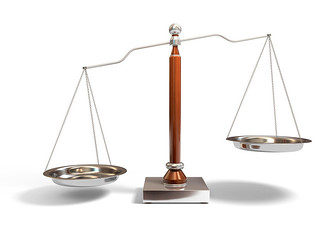
balance scale
Image by winnifredxoxo on Flickr.com Creative Commons Attribution license.

It is generally good advice that in a relationship that is supposed to be power-equal, if the balance goes too far towards one person's favor for too long, this is not a healthy relationship, and boundaries should be put in place.  However, I have been realizing lately that even if a relationship has a balance that is roughly equal, there can still be something subtly but deeply wrong.  I am envisioning a style of relationships that I will call "emotionally brokered relationships."

To come up with this term, I used a metaphor from the financial industry. I was inspired while reading Gordon White's book, The Chaos Protocols, in which he describes solutions for dealing with the reality of today's economy (the book is not really about relationships... my mind just jumped to that topic).  In the first chapter White proffers a brief history of how the global economy got into the mess it's in today.  In general, the main problem is that the economy is no longer operating on trading real "wealth" (physical goods and services based on human personal interactions), but is instead an elaborate system of relativity.  As currency moves further and further away from the concept of actual wealth and direct transactions, more and more inequalities and dysfunctions are created.  For example, a couple decades ago, the mortgage system made a shift from using straightforward mortgages to security-backed mortgages.  A straightforward mortgage is simply a loan that the bank gives you to buy a home.  A security is a piece of paper that gambles on the  assumption that you will pay the mortgage back (with interest), ensuring future profit. They are basically IOUs on IOUs.  The banks can then mess around with these IOU's and gain incredible wealth, basically out of thin air.  The incentives behind providing loans then became less about offering a service to individuals who needed it, and more about hedging bets and maximizing profit in an abstract inter-bank market.  As White put it, "Banking moved from being relationship-based (which enabled real investment in a real economy) to being transactional; bankers changed from being investors to brokers."  In this system, even a mortgage that is technically "fair" for both the lender and the buyer, isn't truly an authentic transaction, and behind the scenes it's almost always working in favor of the big bank.

I think a similar difference can be described in how some people conduct relationships.  For some, even their intimate relationships are not engaged with for their own sake, but instead are used as a form of social capital to increase personal power.  Part of the psyche separates itself from the direct relationship and tries to direct and manage the transactions towards an ulterior goal. There is something quite nefarious about this mode of operating, and difficult to discern.  One blatant example of this would be when people brag about how good their relationships are, as a form of ego-boosting, or to sell a book or workshop, or something like that. But there are other subtle ways that people can do this, brokering out the relationship to serve a dark ulterior set of motives.  In relationships like these, even if the relational transactions are technically "balanced," they actually aren't, really.  The party doing the emotional brokering is actually operating from a place of deep selfishness, and will always be looking for little ways to cut corners on the relational transactions, or grasping for subtle psychic superiority.  Evil people conduct all of their relationships this way, and use every opportunity to take as much as they can, only giving back when it will lead to personal advantage, calculating every move to ensure personal psychic profit.

I said this mode of relationship is nefarious, but I am now thinking of situations where it doesn't necessarily have to be.  Perhaps it is sometimes even necessary for health.  When people have their guards down, and relate to each other directly, and build that balance of inputs and outputs together, there is an authenticity that leads to joy and mutual satisfaction.  However, the unlucky among us quickly learn that this unguarded style is not wise to use with every person.  Some people are dangerous.  It can be a sign of maturity when one learns that relational transactions must be "brokered" to some extent, to ensure that you don't get taken advantage of.  Part of your psyche needs to separate from the transaction, and observe it objectively, to make sure it's actually fair and going well.  If that starts not being the case, that part, "the broker," steps in and takes measures to protect you.  The ulterior motive here is self-preservation, which isn't necessarily evil.  Indeed, it should be a given.  The difference between this nicer way of brokering I'm thinking of, and evil, is that the motives are still relationship based.  The players want to have a healthy relationship for its own sake, and they want fairness. They just need to make sure it's safe before they let their guards down.  As opposed to the evil person I mentioned earlier, who only wants relationships if they serve the ego.

Problem can arise when a person uses the brokered mode for so long, they become incapable of switching into a direct, authentic transactional mode.  Brokering is not a satisfying way to conduct close relationships, because it necessarily precludes intimacy, which brings true joy.  At some point, when both sides know they can trust each other with their hearts, the relationship "broker" must be abandoned, and the two parties must face each other directly, nakedly, and authentically, and they must build something together.  If one or both parties are unwilling to do this, then true love will never grow.  Even if such a relationship has every indication of being a balanced one, it is not really healthy.

It's tricky to know when it's safe to "fire your emotional broker" in a relationship.  Myself, I have been hurt so much, that I find myself needing lots of proof from another that they are trustworthy.  I will enter relationships not fully engaged, but "trading relationship commodities" in as fair a manner as I know how, and watching to see if the other operates fairly as well.  If s/he doesn't, I bolster my walls and might even go as far as removing them from my life.  I think this is healthy, even if it's not as fun as falling in love every other week.  I have a lot to offer; this makes me a desirable target for people who would like to take a lot.  I have only a few friendships in my life where I'm operating from an unguarded position.  I do wonder if I'll ever be able to let go again and relax with my full self exposed in a romantic relationship... and I wonder how hard a fight my "emotional broker" will put up, when it's time to step down.  I feel like it would take awhile, given my experiences with men so far.  I need to know that the other likes every last weird piece of me and would never judge me, would never exploit my weaknesses, would take a bullet for me, would help me, would listen wholeheartedly to me, and would keep my best interests at heart always.  And I long to offer all of the above to someone else as well.  Not just because that's only fair, but because that's what true love is.  And true love is its own reward.