I've heard a certain teaching, in various forms, which I have tried to integrate into my life for very personal reasons. It is a teaching similar to "the law of attraction," and goes something along the lines of: we are often attracted to people who have a lesson that we need to learn, or who have some quality in abundance that we sense is missing in our own lives ("opposites attract"), or who remind us of our unintegrated shadows. Thus, the teaching goes, if you're attracted to someone who doesn't share your feelings, or who is unhealthy for you, or who is "off limits" for whatever reason, the way to resolve that attraction is to work on the issues in yourself that are brought up by this person. Kind of like when your body needs certain nutrients, it craves foods that contain those nutrients. So you can essentially swap a healthful food in for an unhealthful one that contains the nutrients you need.
Well, in my case, I've tried that, sincerely and fully, and I can say that it usually doesn't work. After much reflection, I've decided that this teaching, which I'll call "the Other to Assimilate" has its merits, but it is also dangerous.
First of all, the insidious idea is that my love is something that serves ME, not the other. I'm not actually attracted to the other person; I'm just deceiving myself. I'm really attracted to the lessons he can teach ME, or the qualities in MYSELF that need to be brought forth that he can help with, or even a simple presence to ease MY loneliness.
Well, no.
That's not actually how it works.
After much soul searching, I've realized that most of the people I've loved, I've loved for THEMSELVES. Even after I learn the lessons that I needed to learn from their presence (and believe me, my conscience is a strong disciplinarian), even after my soul matures and grows due to their influence, even after I find another person to assuage my loneliness, I still miss that specific person when s/he is gone. I'm not missing their lessons or their influence, I'm missing them. Some ineffable quality, an "other," a unique expression of life that defines them as themselves and nobody else. Yes, if they are abusive or harmful to myself, I need to cut them out of my life. But when there's real love, I grieve their loss, not (only) because of what they gave me, but because of who they are.
Secondly, it reduces love to a flat, predictable formula. Person X has quality Y; I need Y; therefore, I need X. But love is much richer than that. There is always some assimilation of the other's qualities in any relationship; this is a valid component of love. But there's so much more. There's physical attraction, familiarity of soul, companionship, personality, common activities... Unending possibilities. Every person is a unique universe of potential, character traits, mannerisms, preferences, activities, ideas, and so on. When you meet someone whose universe somehow resonates with your own, you can't pinpoint one specific reason that you want to be with them, if it's really love. It's a multi-dimensional, ever-changing, and immense experience.
Thirdly, for some reason, this "Other to Assimilate" teaching seems only to be espoused when talking about romantic love. I never hear people mourning the death of a family member being advised to "learn the lessons you're supposed to learn from that person and move on." They aren't urged to introspect on what caused them to be attracted to that family member in the first place. Why is a familial attachment any different than a romantic attachment? Maybe because there's a tacit recognition that we don't choose our family members and therefore don't really have control over whether we become attached to them or not. But I think this takes away from the depths of love. Maybe we are attracted to people romantically for the same reasons we are attracted to our family members or our close friends. Maybe the romantic Other feels, at some deep level, like family. Why would we take away from the grief of someone who's lost a romantic prospect, just because it's slightly different than an actual family member?
Finally, this "Other to Assimilate" teaching opposes itself to the feelings and experiences of those who love, or grieve the loss of love. It essentially tells someone, "I know you FEEL like you love that person, but your feelings are lying. You actually love yourself." If our feelings are not accurate indicators of our emotional reality, which is by definition intangible and immeasurable, then what can we trust? Why would we allow somebody who doesn't know us, doesn't know the situation, and is guided by an ideology to prove rather than commitment to reality, to tell us what's "really" going on? Maybe your feelings are right. Maybe you do love the other. Maybe you should just listen to your feelings for once and not try to explain away the unexplainable.
People aren't foods to consume. They are people. Respect that.

Wednesday, July 23, 2014


Friday, June 27, 2014
A landmark debate: Modern vs. Traditional Astrology
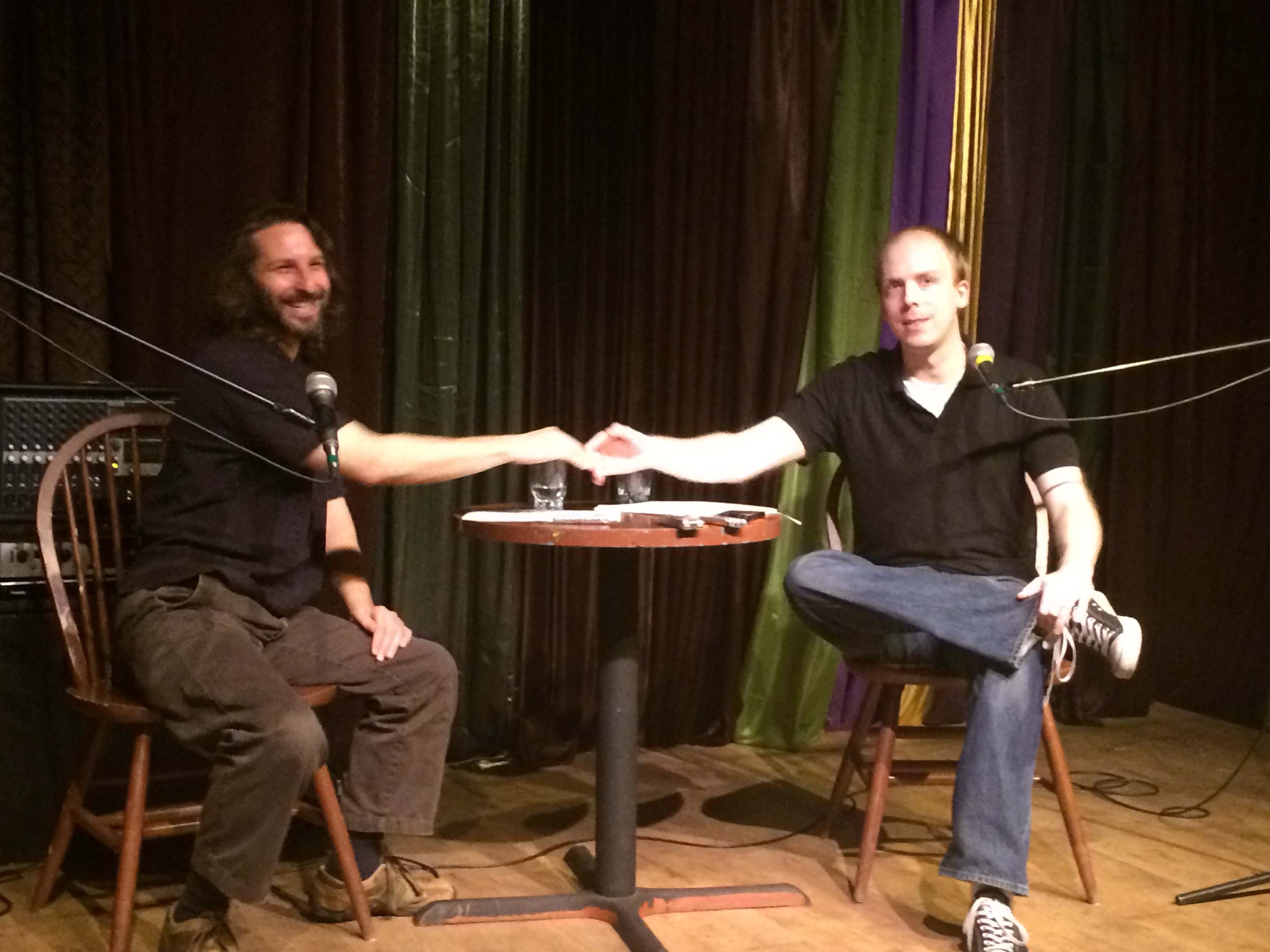
Recently there was a debate between Chris Brennan and Eric Meyers on the topic of "Modern vs. Traditional Astrology" that has been making waves in the astrological community. This is a big deal. You will want to listen to this if you care about astrology.

I'm posting my comments on the debate here.
The first thing I need to say is that I'm not a professional astrologer, and am not trained in any kind of advanced techniques for analyzing an astrological chart. I know some basics, and am interested in the field, so I cannot comment on the efficacy or usefulness of any particular technique mentioned in the show. My comments are mainly philosophical.
Unfortunately, I'm mostly going to have to pick on Meyers in this post. He did a lot of interrupting and steam-rolling, and Brennan wasn't able to get a lot of words in edgewise, so there's more to pick on.
The first and overarching fallacy Meyers engaged in was appealing to quantum theory as a way of trying to prove his spiritual beliefs as objectively true. This is common in New Age circles. They watch the documentary What the Bleep Do We Know Anyway?, and maybe read a few articles about some basic principles of quantum physics, and they jump to conclusions about the applications of this science, namely, the conclusions that Quantum Theory proves their spiritual beliefs.

I have two friends who are actually familiar with the field of QT--one, Charles S., is a brilliant computer scientist and pianist, the other, Eric F.-L., is a math professor at Benedictine College. Neither of them are likely to be into astrology, but I asked them a bit about Quantum Theory, and one thing they made sure to emphasize is that there's a difference between the scientific theory, proper, and the varying interpretations of the theory. With their permission, I'm copying part of our conversation (emphases mine):
In other words, Quantum Theory can be used for scientific purposes, but it cannot teach us about spiritual truths. Unfortunately, we still have to rely on revelation for that. And, equally unfortunately, without hard proof we may still have to disagree about which spiritual revelations are actually true.
Meyers' spiritual culture teaches him that all of life is a dream, and we are all projecting our own beliefs and realities into the dream scape, and attracting situations, people, and events to our lives that will teach us spiritual lessons.
My spiritual beliefs do not align with his. I disagree with him, quite strongly, on some points. But I can't use quantum physics or any other scientific theory to prove him wrong; likewise, he cannot use quantum physics or any other scientific theory to prove me wrong.
Brennan is probably not an expert in scientific fields (and I highly doubt Meyers is either), so he didn't call Meyers on this point, but if he had done so, it would have changed the entire debate. That was the one card Meyers kept pulling, the foundation he tried to build everything else on, and it was a terribly weak foundation.
The next point I want to make is that it would be useful to distinguish between spiritual consciousness and cognition. I'm not sure if Meyers was trying to equate them when he brought up the idea of giraffe and spider charts compared to human charts, or if he was just using a metaphor. Either way, there are problems.
If he meant to say that the main difference between a human and a giraffe is the level of consciousness (and presumably he'd assert that human consciousness is "higher" than a giraffe's), and if he's equating consciousness with cognition, then the logical conclusion would be that with enough spiritual practice, a giraffe could eventually achieve the consciousness of a human. Also, if he is equating consciousness and cognition, and if a lower level of consciousness means a "darker manifestation" of the chart's energies (attracting negative energies and situations,) then all animals, due to being "lower" in consciousness than humans, would consistently live in "dark" energies and manifestations.

If he meant to use cognition as a metaphor for spiritual consciousness, then the metaphor is a poor one. The problem is, Meyers asserts that self will is the major factor in spiritual development, but it's a fact that the development of cognition is largely out of our control. Though there is much variation, humans (all animals, actually) go through fairly predictable stages of cognitive development, and many, of not all, of these are directly influenced by biological developments (brain, hormones, etc.) A two year old doesn't wake up one day and decide to start talking, to control her bladder, or to explore everything she sees. These things are natural parts of normal human development. Free will plays a part in the process, but the bulk of cognitive development seems to be predetermined by genetics and environment. If spiritual maturity is being compared to cognitive maturity, why would spiritual development be completely a matter of free will, when cognition is not?

In any case, what does this have to do with astrology? I'm certain that there's no astrologer out there who will say that everything about a person's life can be explained by astrological factors. (As far as I know, a person's chart can't even reveal the gender of the native, which is obviously a huge part of a person's identity.) Brennan wasn't saying that astrology explained a 100% mechanistic and fatalistic universe, but that seemed to be the strawman that Meyers was attacking when he tried to discredit traditional astrology.
If you want to hold certain spiritual beliefs as an astrologer, that's completely fine, but you can't use your spiritual beliefs (which are, by definition, unprovable) to deny that certain astrological techniques, which can be (more or less) proven, actually work. Actually, Meyers doesn't seem to be doing that; he's doing something worse. He's using his spiritual beliefs as an excuse not to even investigate whether certain astrological techniques work. As the old expression goes, the only thing preventing you from finding truth is the belief you've already found it.
This blog post is getting pretty long. Though I have so much more to say, I'll close by stating what, if I were in the audience that night, I would have asked Meyers and Brennan during the Q&A after the debate.
To Mr. Meyers: According to what you've said tonight, people "attract" situations that they judge as "negative" to them in order to learn spiritual lessons. If a person is more spiritually enlightened, conscious, mature, or whatever the word you want to use, then they will attract less darkness and more light, and, presumably, suffer less. Therefore, by your logic, what's been called "the 1%" in the USA, the richest people, who have considerably less suffering than the rest of us, should be the most spiritually-awakened individuals in the world. This is known as a "just-world" viewpoint, that people get what they deserve. Do you really want to defend this viewpoint?
To Mr. Brennan: You mentioned that the Tradition should be adaptable to the culture it finds itself in, and techniques and such can be modified to fit the needs of new situations. That you use Uranus, Neptune, and Pluto is one testimonial to your flexibility. How, though, do you think traditional astrology, which is rooted in such patriarchal and somewhat rigid cultures, can be reconciled faithfully with today's increased social mobility, feminism, globalism, and other such sensibilities of today's culture?
I'm posting my comments on the debate here.
The first thing I need to say is that I'm not a professional astrologer, and am not trained in any kind of advanced techniques for analyzing an astrological chart. I know some basics, and am interested in the field, so I cannot comment on the efficacy or usefulness of any particular technique mentioned in the show. My comments are mainly philosophical.
Unfortunately, I'm mostly going to have to pick on Meyers in this post. He did a lot of interrupting and steam-rolling, and Brennan wasn't able to get a lot of words in edgewise, so there's more to pick on.
The first and overarching fallacy Meyers engaged in was appealing to quantum theory as a way of trying to prove his spiritual beliefs as objectively true. This is common in New Age circles. They watch the documentary What the Bleep Do We Know Anyway?, and maybe read a few articles about some basic principles of quantum physics, and they jump to conclusions about the applications of this science, namely, the conclusions that Quantum Theory proves their spiritual beliefs.
https://flic.kr/p/7bCCg8
I have two friends who are actually familiar with the field of QT--one, Charles S., is a brilliant computer scientist and pianist, the other, Eric F.-L., is a math professor at Benedictine College. Neither of them are likely to be into astrology, but I asked them a bit about Quantum Theory, and one thing they made sure to emphasize is that there's a difference between the scientific theory, proper, and the varying interpretations of the theory. With their permission, I'm copying part of our conversation (emphases mine):
C: Actually, quantum mechanics is one of the most solid theories out there as far as the math goes. It has a staggering amount of evidence backing it up, and as far as the math goes, it's one of the best theories out there in terms of predictive power, and it has plenty of solid conclusions.
The problem with quantum mechanics is that it's weird, and doesn't seem to make intuitive sense. It's extremely accurate, and if you do the math, you get the right results, but very few people completely understand it, which allows other people to abuse it to justify whatever pseudoscientific beliefs they like and generally get away with it.
Me: Pretty sure you can't use quantum theory to "prove" that there is no objective reality, and we are all creating the illusion of the universe as we go along, as the New Agers are trying to say?
E: That's right -- you can't use quantum theory to prove there is no objective reality. As Charles said, the math is solid, but as for the interpretation, there are many competing ideas. The idea that sentient observers create their own reality is certainly not a necessary part of quantum theory (in fact, you'd be hard pressed to come up with an interpretation that consistently includes the idea of creating your own reality, since everyone's realities have to agree).
C: That kind of thing would fall under the umbrella of the pseudoscientific beliefs that I was referring to. Well, there's the MWI, in which there are many different realities that don't necessarily all agree with each other. That still doesn't mean you create your own reality, though, especially since in MWI, it's hard to figure out what "you" would even mean. Also, MWI, like most interpretations of QM, is hard to call scientific, since so far no one's thought of any way to test it other than the quantum suicide experiment, which would only produce valid results for the person who was doing it.
E: yeah, many worlds was the only one I could think of where a "create your own realities" philosophy might be possible, but as you said, even that would be pretty shady.
In other words, Quantum Theory can be used for scientific purposes, but it cannot teach us about spiritual truths. Unfortunately, we still have to rely on revelation for that. And, equally unfortunately, without hard proof we may still have to disagree about which spiritual revelations are actually true.
Meyers' spiritual culture teaches him that all of life is a dream, and we are all projecting our own beliefs and realities into the dream scape, and attracting situations, people, and events to our lives that will teach us spiritual lessons.
My spiritual beliefs do not align with his. I disagree with him, quite strongly, on some points. But I can't use quantum physics or any other scientific theory to prove him wrong; likewise, he cannot use quantum physics or any other scientific theory to prove me wrong.
Brennan is probably not an expert in scientific fields (and I highly doubt Meyers is either), so he didn't call Meyers on this point, but if he had done so, it would have changed the entire debate. That was the one card Meyers kept pulling, the foundation he tried to build everything else on, and it was a terribly weak foundation.
The next point I want to make is that it would be useful to distinguish between spiritual consciousness and cognition. I'm not sure if Meyers was trying to equate them when he brought up the idea of giraffe and spider charts compared to human charts, or if he was just using a metaphor. Either way, there are problems.
If he meant to say that the main difference between a human and a giraffe is the level of consciousness (and presumably he'd assert that human consciousness is "higher" than a giraffe's), and if he's equating consciousness with cognition, then the logical conclusion would be that with enough spiritual practice, a giraffe could eventually achieve the consciousness of a human. Also, if he is equating consciousness and cognition, and if a lower level of consciousness means a "darker manifestation" of the chart's energies (attracting negative energies and situations,) then all animals, due to being "lower" in consciousness than humans, would consistently live in "dark" energies and manifestations.
"Attack of a Vampire Kitty!"
by tanakawho, Flickr
If he meant to use cognition as a metaphor for spiritual consciousness, then the metaphor is a poor one. The problem is, Meyers asserts that self will is the major factor in spiritual development, but it's a fact that the development of cognition is largely out of our control. Though there is much variation, humans (all animals, actually) go through fairly predictable stages of cognitive development, and many, of not all, of these are directly influenced by biological developments (brain, hormones, etc.) A two year old doesn't wake up one day and decide to start talking, to control her bladder, or to explore everything she sees. These things are natural parts of normal human development. Free will plays a part in the process, but the bulk of cognitive development seems to be predetermined by genetics and environment. If spiritual maturity is being compared to cognitive maturity, why would spiritual development be completely a matter of free will, when cognition is not?
In any case, what does this have to do with astrology? I'm certain that there's no astrologer out there who will say that everything about a person's life can be explained by astrological factors. (As far as I know, a person's chart can't even reveal the gender of the native, which is obviously a huge part of a person's identity.) Brennan wasn't saying that astrology explained a 100% mechanistic and fatalistic universe, but that seemed to be the strawman that Meyers was attacking when he tried to discredit traditional astrology.
If you want to hold certain spiritual beliefs as an astrologer, that's completely fine, but you can't use your spiritual beliefs (which are, by definition, unprovable) to deny that certain astrological techniques, which can be (more or less) proven, actually work. Actually, Meyers doesn't seem to be doing that; he's doing something worse. He's using his spiritual beliefs as an excuse not to even investigate whether certain astrological techniques work. As the old expression goes, the only thing preventing you from finding truth is the belief you've already found it.
This blog post is getting pretty long. Though I have so much more to say, I'll close by stating what, if I were in the audience that night, I would have asked Meyers and Brennan during the Q&A after the debate.
To Mr. Meyers: According to what you've said tonight, people "attract" situations that they judge as "negative" to them in order to learn spiritual lessons. If a person is more spiritually enlightened, conscious, mature, or whatever the word you want to use, then they will attract less darkness and more light, and, presumably, suffer less. Therefore, by your logic, what's been called "the 1%" in the USA, the richest people, who have considerably less suffering than the rest of us, should be the most spiritually-awakened individuals in the world. This is known as a "just-world" viewpoint, that people get what they deserve. Do you really want to defend this viewpoint?
To Mr. Brennan: You mentioned that the Tradition should be adaptable to the culture it finds itself in, and techniques and such can be modified to fit the needs of new situations. That you use Uranus, Neptune, and Pluto is one testimonial to your flexibility. How, though, do you think traditional astrology, which is rooted in such patriarchal and somewhat rigid cultures, can be reconciled faithfully with today's increased social mobility, feminism, globalism, and other such sensibilities of today's culture?
Monday, June 23, 2014
holiness is evil
My conscience is sharp and keeps me on a short chain. The very night after I posted my previous post, bashing on "science fundamentalists," my dreams became troubled. I don't remember what they were, but I woke up with a strong memory from 8 years ago, and a profound sense of guilt. Apparently, my conscience won't let me get away with a judgemental tone towards fundamentalists without reminding me that I used to be one, myself. I must stay humble.
I was at the Conservatory of Recording Arts & Sciences, working towards certification in audio engineering. I found out that another student there needed to record something for her midpoint project. I volunteered, as there was a song I had written in high school that I wanted to record. As a teenager, I had performed it at a women's retreat at my church and had gotten great feedback at the time. It had been niggling in my mind for awhile that I wanted to get the song recorded, and this seemed like a great opportunity.
This classmate of mine was leaving the school halfway through the program, due to being pregnant. She was unmarried, and struggling, but that's the only thing I knew about her situation. I didn't actually know her very well, as we were in different cohorts. She said she just wanted to get the project done, so she was happy that my song was just for piano and voice, not a full band. She was fairly far along in the pregnancy, and tired.
My song was called "Full of You," and it was about wanting to be "God's kind of girl." I am not proud of this song, but I feel the need to be open about the kind of person I was then. Confession is good for the soul.
The first few stanzas of this song were:
I watch the girls who pass me by
They simply seem the same
A giddy mind, a flirting eye
A smile with little shame
Some had shallow sheltered lives
And some a rougher start
I see the spirit of the times
And I'm vowing in my heart
I want to be the kind of girl who only points to You
Making my mark on this world, by always ringing true
Not seeking only my own pleasure, serving with a smile
I want to gain that heavenly treasure, and walk the extra mile
And walk in Jesus' style
It was a song about desiring holiness. It was about being different, pure, a true believer. About being full of God. As opposed to all those other girls out there, those impure, shallow, flirtatious, self-centered girls. The kinds of girls who, oh, say... get pregnant out of wedlock.
How could I not have seen what I was doing? How could I not have noticed the irony?
Now, in my defense, I didn't really think about the appropriateness of recording my Christian song in a secular environment for an audience of unknown faith. Nor was I thinking about evangelism, although if I had stopped to ask myself if this was a good idea, I might have defended it by using the excuse that I wanted to "shine my light." I was honestly just thinking, "I like this song, and I want to record it." I was charging forth in my holiness, only dimly aware of or concerned about what the others around me might be going through.
In my holiness, I ignored a sister who needed help.
In my holiness, I shamed her.
In my holiness, I put myself above her.
When I woke up only now having put this realization together, I grew ill with disgust at myself. I wished I could go back and choose a different song to record. I wished I could go back and offer to help this woman with some practical needs (though I didn't know much about pregnancy or child care at that time). I wished I could even remember my class mate's full name to try to find her now and check to make sure she's OK.
After a few hours of stewing in this, I remembered to have compassion on myself. My attitude of prioritizing principles over people was formed by the culture in which I grew up and had little control over. I was taught to think this way. The people who taught me were well-intentioned, but misguided. "When you know better you do better," and at the time I didn't know better.
I would like to think I have grown and changed a lot in eight years. I hope so. I hope I wouldn't do such a thing again, but I honestly don't know. I'm sure this character trait of wanting to be right above all else is one that I'll have to work to keep in balance for the rest of my life. It's hard to know whether maturity has been gained until it is tested.
This experience of realizing the damage that I did has solidified in me a determination to change the culture that made my unintentional arrogance possible. To fight the doctrines and systems of thought that allow and encourage people to dehumanize others. Cultures that encourage their participants to be "holy," in whatever form or language that is expressed, always, whether intentionally or not, do so at the expense of raising themselves up in value over other humans. Holiness is pride, the number one sin. Whenever humans set themselves up as better than others, only harm ensues. Therefore, holiness leads to evil.
I was at the Conservatory of Recording Arts & Sciences, working towards certification in audio engineering. I found out that another student there needed to record something for her midpoint project. I volunteered, as there was a song I had written in high school that I wanted to record. As a teenager, I had performed it at a women's retreat at my church and had gotten great feedback at the time. It had been niggling in my mind for awhile that I wanted to get the song recorded, and this seemed like a great opportunity.
This classmate of mine was leaving the school halfway through the program, due to being pregnant. She was unmarried, and struggling, but that's the only thing I knew about her situation. I didn't actually know her very well, as we were in different cohorts. She said she just wanted to get the project done, so she was happy that my song was just for piano and voice, not a full band. She was fairly far along in the pregnancy, and tired.
My song was called "Full of You," and it was about wanting to be "God's kind of girl." I am not proud of this song, but I feel the need to be open about the kind of person I was then. Confession is good for the soul.
The first few stanzas of this song were:
I watch the girls who pass me by
They simply seem the same
A giddy mind, a flirting eye
A smile with little shame
Some had shallow sheltered lives
And some a rougher start
I see the spirit of the times
And I'm vowing in my heart
I want to be the kind of girl who only points to You
Making my mark on this world, by always ringing true
Not seeking only my own pleasure, serving with a smile
I want to gain that heavenly treasure, and walk the extra mile
And walk in Jesus' style
It was a song about desiring holiness. It was about being different, pure, a true believer. About being full of God. As opposed to all those other girls out there, those impure, shallow, flirtatious, self-centered girls. The kinds of girls who, oh, say... get pregnant out of wedlock.
How could I not have seen what I was doing? How could I not have noticed the irony?
Now, in my defense, I didn't really think about the appropriateness of recording my Christian song in a secular environment for an audience of unknown faith. Nor was I thinking about evangelism, although if I had stopped to ask myself if this was a good idea, I might have defended it by using the excuse that I wanted to "shine my light." I was honestly just thinking, "I like this song, and I want to record it." I was charging forth in my holiness, only dimly aware of or concerned about what the others around me might be going through.
In my holiness, I ignored a sister who needed help.
In my holiness, I shamed her.
In my holiness, I put myself above her.
When I woke up only now having put this realization together, I grew ill with disgust at myself. I wished I could go back and choose a different song to record. I wished I could go back and offer to help this woman with some practical needs (though I didn't know much about pregnancy or child care at that time). I wished I could even remember my class mate's full name to try to find her now and check to make sure she's OK.
After a few hours of stewing in this, I remembered to have compassion on myself. My attitude of prioritizing principles over people was formed by the culture in which I grew up and had little control over. I was taught to think this way. The people who taught me were well-intentioned, but misguided. "When you know better you do better," and at the time I didn't know better.
I would like to think I have grown and changed a lot in eight years. I hope so. I hope I wouldn't do such a thing again, but I honestly don't know. I'm sure this character trait of wanting to be right above all else is one that I'll have to work to keep in balance for the rest of my life. It's hard to know whether maturity has been gained until it is tested.
This experience of realizing the damage that I did has solidified in me a determination to change the culture that made my unintentional arrogance possible. To fight the doctrines and systems of thought that allow and encourage people to dehumanize others. Cultures that encourage their participants to be "holy," in whatever form or language that is expressed, always, whether intentionally or not, do so at the expense of raising themselves up in value over other humans. Holiness is pride, the number one sin. Whenever humans set themselves up as better than others, only harm ensues. Therefore, holiness leads to evil.
Thursday, May 29, 2014
We need a new label
Fundamentalists are people who are so right they're wrong.
We need a new label to add to the fundie camp: science fundamentalists. These are the people who reject ideas out of hand because they haven't been proved by science yet.
Like the gracious and sensitive person on the IFLS facebook page who posted this gem:
 The caption read, "Unless you have been diagnosed with celiac disease, going gluten free will do *nothing* for your health.
Image via Skepchick."
The caption read, "Unless you have been diagnosed with celiac disease, going gluten free will do *nothing* for your health.
Image via Skepchick."
Seriously? What a jerk. These folks deserve to be labeled. I call them, science fundamentalists.
Just because science hasn't figured out the reasons yet, doesn't mean that a lot of people are not truly benefiting from going gluten free. Who is this person to say what will and will not help someone else with a problem no professional seems to know how to solve?
Sometimes, you have a problem that current science hasn't found an answer for yet, and you have to experiment on your own until you figure out what works. I don't appreciate the insinuation that I'm an idiot for that. (Not that I particularly care what other people think.)
My 6-year-old son is one who has found a LOT of relief by cutting out gluten. He had encopresis, which is a word I truly hope you don't know the meaning of. Picture this: You're going about your day, and suddenly there's poop in your pants. You don't have sensation of having to go poop beforehand. It just comes whenever it wants to come, and you don't find out until it's already in your pants. Imagine being a child who has this problem. Imagine being the mother of this child.
The only medical "solution" for this is laxatives. They say it's caused by the child holding in his poop, due to being distracted with other things, or whatever, and so the child gets constipated. In an effort to release the lump of hardened fecal matter stuck in the intestine, the body produces diarrhea, which flows around the lump, and exits the body without activating the normal alert system--the feeling of having to poop. Lovely.
If this is how encopresis works, then laxatives should help. Well, laxatives made him poop a lot alright, but they didn't help him regain his sensations of needing to go. And he still had accidents. The pediatrician also told me to put him on a schedule of sitting on the toilet for a certain amount of time every day. Apparently my already-toilet-trained child had "forgotten" that when you feel like you're supposed to poop, you need to run to the toilet... so I was supposed to retrain him to do that. What? OK... Well, I'll give it a try...
The problem is, these interventions did not work. The poor boy still had accidents every day. The poor mother had to clean a lot of dirty laundry... and walls... and floors... and hands... Nasty! I was desperate. There had to be a cause. There had to be a cure.
Maybe it was a food allergy. There are some people in my family who were lactose intolerant as children; maybe he's reacting to dairy. We cut out dairy for 10 days. No relief. Well, maybe cutting out constipating foods would help. We cut out chocolate and dairy for 10 days. No relief. Still an accident every day. Finally I found this blog:
Mom's Guide to Encopresis
Which said that one family had solved their daughter's problem of encopresis by cutting out gluten and adding probiotics. Well, we were already doing probiotics, so it was a matter of trying gluten.
But my stomach sank. I had done a gluten-free diet for my ex husband several years ago, and it was a major annoyance. I really hoped this wouldn't work... But of course, like I said, I was desperate.
Two days after going gluten free, my son became regular. He could feel the sensation of needing to poop. At first his BM was watery with chunks, but it solidified, and now he has normal daily bowel movements.
I thought maybe it was a coincidence, so two weeks after the bliss of living normally began, I let him eat gluten over the weekend. He was constipated on Monday and had an accident on Tuesday. So we went back to gluten-free. Any time he accidentally gets gluten now, he has an accident the next day.
Placebo? Maybe. But neither I nor he wanted to cut out gluten, because it's such a huge annoyance to live that way, especially when you live in a small town with very few gluten-free substitutes at the grocery stores.. So you will never convince me that cutting out gluten helped him due to placebo; it helped him because it physically helped him. Plus, we tried several other dietary interventions that didn't work, so if placebo were going to work, it should have worked when we cut out dairy or chocolate.
A recent study suggests that maybe it's the reduction in short-chain carbohydrates called "FODMAPs" that might be the "real" source of people's relief when they go on a gluten-free diet. Maybe. The problem is, though, that my son's diet is literally exactly the same as it was before; we just swapped out wheat bread, pasta, and cereal, with gluten-free bread, pasta, and cereal. We were already avoiding HFCS, artificial sweeteners, artificial colors, and most soy. We rarely eat beans. He eats apples regularly, as well as other foods with FODMAPs. The gluten is the only thing that changed.
I'm not saying it has to be the gluten. Maybe it's something else in wheat, or a combination of factors. I'm not committed to a single position, except the position that I want my son to be able to function properly. I'm just saying, it's working... why are people rude enough to tell me it's not, when I see it with my own eyes?
For a science fundie to tell me that cutting out gluten will do nothing for my health because we don't have scientific studies to prove it, is the same as a Christian fundie saying that a Muslim or an Atheist can't possibly have a happy and fulfilled life because Jesus is the only source of fulfillment. It's the same attitude! To maintain their position, these fundamentalists have to ignore the testimonials of millions of people.
How about a new joke?
If a tree falls in the forest, and a group of peasants hears it land, did it actually make a sound? A science fundamentalist would say, "not unless there's a scientist with a decibel meter there to tell us how loud the impact was."
This isn't to say that science doesn't work. I have a very high respect for science. I'm just saying that science hasn't figured EVERYTHING out yet, and pooh pooh-ing something that is working for a lot of people just because there's some study that says "that shouldn't work" or "there's no study that shows how it works" is arrogant and closed-minded. Science fundamentalists are going against the exploratory spirit of science, itself, by committing themselves unshakably to a position and dismissing or attacking anyone who holds a different position.
The world is vast!
There's so much more to learn!
You can be wrong!
We need a new label to add to the fundie camp: science fundamentalists. These are the people who reject ideas out of hand because they haven't been proved by science yet.
Like the gracious and sensitive person on the IFLS facebook page who posted this gem:
Seriously? What a jerk. These folks deserve to be labeled. I call them, science fundamentalists.
Just because science hasn't figured out the reasons yet, doesn't mean that a lot of people are not truly benefiting from going gluten free. Who is this person to say what will and will not help someone else with a problem no professional seems to know how to solve?
Sometimes, you have a problem that current science hasn't found an answer for yet, and you have to experiment on your own until you figure out what works. I don't appreciate the insinuation that I'm an idiot for that. (Not that I particularly care what other people think.)
My 6-year-old son is one who has found a LOT of relief by cutting out gluten. He had encopresis, which is a word I truly hope you don't know the meaning of. Picture this: You're going about your day, and suddenly there's poop in your pants. You don't have sensation of having to go poop beforehand. It just comes whenever it wants to come, and you don't find out until it's already in your pants. Imagine being a child who has this problem. Imagine being the mother of this child.
The only medical "solution" for this is laxatives. They say it's caused by the child holding in his poop, due to being distracted with other things, or whatever, and so the child gets constipated. In an effort to release the lump of hardened fecal matter stuck in the intestine, the body produces diarrhea, which flows around the lump, and exits the body without activating the normal alert system--the feeling of having to poop. Lovely.
If this is how encopresis works, then laxatives should help. Well, laxatives made him poop a lot alright, but they didn't help him regain his sensations of needing to go. And he still had accidents. The pediatrician also told me to put him on a schedule of sitting on the toilet for a certain amount of time every day. Apparently my already-toilet-trained child had "forgotten" that when you feel like you're supposed to poop, you need to run to the toilet... so I was supposed to retrain him to do that. What? OK... Well, I'll give it a try...
The problem is, these interventions did not work. The poor boy still had accidents every day. The poor mother had to clean a lot of dirty laundry... and walls... and floors... and hands... Nasty! I was desperate. There had to be a cause. There had to be a cure.
Maybe it was a food allergy. There are some people in my family who were lactose intolerant as children; maybe he's reacting to dairy. We cut out dairy for 10 days. No relief. Well, maybe cutting out constipating foods would help. We cut out chocolate and dairy for 10 days. No relief. Still an accident every day. Finally I found this blog:
Mom's Guide to Encopresis
Which said that one family had solved their daughter's problem of encopresis by cutting out gluten and adding probiotics. Well, we were already doing probiotics, so it was a matter of trying gluten.
But my stomach sank. I had done a gluten-free diet for my ex husband several years ago, and it was a major annoyance. I really hoped this wouldn't work... But of course, like I said, I was desperate.
Two days after going gluten free, my son became regular. He could feel the sensation of needing to poop. At first his BM was watery with chunks, but it solidified, and now he has normal daily bowel movements.
I thought maybe it was a coincidence, so two weeks after the bliss of living normally began, I let him eat gluten over the weekend. He was constipated on Monday and had an accident on Tuesday. So we went back to gluten-free. Any time he accidentally gets gluten now, he has an accident the next day.
Placebo? Maybe. But neither I nor he wanted to cut out gluten, because it's such a huge annoyance to live that way, especially when you live in a small town with very few gluten-free substitutes at the grocery stores.. So you will never convince me that cutting out gluten helped him due to placebo; it helped him because it physically helped him. Plus, we tried several other dietary interventions that didn't work, so if placebo were going to work, it should have worked when we cut out dairy or chocolate.
A recent study suggests that maybe it's the reduction in short-chain carbohydrates called "FODMAPs" that might be the "real" source of people's relief when they go on a gluten-free diet. Maybe. The problem is, though, that my son's diet is literally exactly the same as it was before; we just swapped out wheat bread, pasta, and cereal, with gluten-free bread, pasta, and cereal. We were already avoiding HFCS, artificial sweeteners, artificial colors, and most soy. We rarely eat beans. He eats apples regularly, as well as other foods with FODMAPs. The gluten is the only thing that changed.
I'm not saying it has to be the gluten. Maybe it's something else in wheat, or a combination of factors. I'm not committed to a single position, except the position that I want my son to be able to function properly. I'm just saying, it's working... why are people rude enough to tell me it's not, when I see it with my own eyes?
For a science fundie to tell me that cutting out gluten will do nothing for my health because we don't have scientific studies to prove it, is the same as a Christian fundie saying that a Muslim or an Atheist can't possibly have a happy and fulfilled life because Jesus is the only source of fulfillment. It's the same attitude! To maintain their position, these fundamentalists have to ignore the testimonials of millions of people.
How about a new joke?
If a tree falls in the forest, and a group of peasants hears it land, did it actually make a sound? A science fundamentalist would say, "not unless there's a scientist with a decibel meter there to tell us how loud the impact was."
This isn't to say that science doesn't work. I have a very high respect for science. I'm just saying that science hasn't figured EVERYTHING out yet, and pooh pooh-ing something that is working for a lot of people just because there's some study that says "that shouldn't work" or "there's no study that shows how it works" is arrogant and closed-minded. Science fundamentalists are going against the exploratory spirit of science, itself, by committing themselves unshakably to a position and dismissing or attacking anyone who holds a different position.
The world is vast!
There's so much more to learn!
You can be wrong!
Thursday, May 8, 2014
transition
I'm moving at the end of this month. Moving out— that I know— but I don't know where TO yet. It depends on if someone hires me. The backup plan is to move back in with Mom. Back in.
If that happens, it'll be three and a half years since moving out from Mom's, and I won't have made any progress. A giant 3-1/2 year circle. But maybe something good will happen, and that won't be necessary. One must retain hope. I'm smart, educated, detail-oriented, passionate and a team player, right? I bring a lot of value. Companies are foolish to overlook me. Dear God, I'm starting to believe my own cover letters.
I'm not a huge fan of this decrepit old house, but it has served us decently well the past few years, despite the plumbing backing up constantly, the lack of closets, the gaping holes in the windows, and the cracks in the paper-thin walls. I know and appreciate that I'm lucky to have running water, electricity, and a roof. I'm not complaining, really I'm not. I have genuinely enjoyed trying to wrestle this rectangular squat into something resembling pretty and livable.
I'm just fighting the feelings of nostalgia trying to grab me as I envision saying goodbye to the old place. Why would I miss this dumpy disaster of architectural indifference? There's surely something better for me out there to go to, somewhere to call home that deserves such a title. (Or maybe not. Life has no guarantees.)
"Don't feel. Just pack. One step at a time, that's all you can do."
And then, as I pull out some books from my disheveled bookshelf, a CD pops into view. His CD. The one I bought from him 11 years ago and listened to until I'd memorized the songs, absorbed the timbres, and conformed to the textures. The one I'd listened to whenever the ache for him became unbearable (but I felt forbidden to do anything about it, like, oh, ask him out.) The forms, rhythms, chord progressions, and concepts were well-conceived, and the perfectly-placed sarcasm was charming and hilarious... but he sure needed some voice lessons. But that detail only barely mattered. A raspy, scooping assault on the auditory sensibilities can't hold a candle to the power of love.
Love's way of sneaking into your soul and infiltrating the little crevices of your consciousness, sabotaging your critical powers, and blurring the sharp edges of your discernment, is truly diabolical. That you could want someone, so badly, whom you also both fear and spurn, whom you disagree with so strongly, whom you logically worry would turn out to be a bad match anyway, should be illegal.
And a decade after buying the CD, after my transformation, he was suddenly no longer forbidden, I disagreed with him much less, and he was available (kind of). It could have worked, surely. Were the timing different, had I been more suave, had I not tripped over myself... or something... I don't actually know why it didn't work. He didn't feel the same way, apparently. Does there need to be any other explanation?
Anyway, I thought I was SO over it, moving on, putting the jerkface in the past. I even have a new forbidden crush now. (How original, my idiotic heart, how original.) But now. Now this CD is burning my hands, and as I throw it away from me as sharply as if it were a scorpion, the ache bursts out from my core, all over again. And despite my attempts not to feel, a strange, choking, crying sound hits my ears, and I realize it's mine. I have to hold a tissue to my eyes the entire time while reading bedtime stories to my children.
Gone. He's gone forever... but still alive. I could bump into him accidentally some day. It's worse than if he were dead, because there's still a possibility of seeing him. We could both end up on the same airplane, or visiting the same museum. What would I do then? Maybe he'll become a famous musician, and I'll hear him on the radio or something, and have to endure people talking about going to his concerts. Why do I care? Why did I ever care in the first place? He's a jerk, that's what I have to tell myself to make any kind of sense of what happened.
Maybe I don't really care. Maybe I'm more over him than I feel tonight. Maybe this event is just a trigger for the broader feelings of anxiety, loneliness, and uncertainty I'm facing as I move into a very dark and murky future. Maybe it's easier to think that I'm crying about a past loss than to admit that I'm illogically emotional about a present in which my emotions have no say, whatsoever, in the outcome. Maybe crying about the past allows me to feel more powerful, somehow. To tell myself that maybe I COULD have had a different outcome, if only I were better at dealing with men, or didn't have children, or... something..., than to own up to the fact that the outcome for the future feels completely out of my control, and that makes me feel very vulnerable.
Or maybe it really is how it feels, and I'm just feeling wounded from thinking about him, all over again.
The CD is in the trash. Such a waste. But I'd rather listen to the Gaither Band on infinite repeat than that beautiful-odd thing one more time.
Damn these feelings. Don't feel. Just pack.
If that happens, it'll be three and a half years since moving out from Mom's, and I won't have made any progress. A giant 3-1/2 year circle. But maybe something good will happen, and that won't be necessary. One must retain hope. I'm smart, educated, detail-oriented, passionate and a team player, right? I bring a lot of value. Companies are foolish to overlook me. Dear God, I'm starting to believe my own cover letters.
I'm not a huge fan of this decrepit old house, but it has served us decently well the past few years, despite the plumbing backing up constantly, the lack of closets, the gaping holes in the windows, and the cracks in the paper-thin walls. I know and appreciate that I'm lucky to have running water, electricity, and a roof. I'm not complaining, really I'm not. I have genuinely enjoyed trying to wrestle this rectangular squat into something resembling pretty and livable.
I'm just fighting the feelings of nostalgia trying to grab me as I envision saying goodbye to the old place. Why would I miss this dumpy disaster of architectural indifference? There's surely something better for me out there to go to, somewhere to call home that deserves such a title. (Or maybe not. Life has no guarantees.)
"Don't feel. Just pack. One step at a time, that's all you can do."
And then, as I pull out some books from my disheveled bookshelf, a CD pops into view. His CD. The one I bought from him 11 years ago and listened to until I'd memorized the songs, absorbed the timbres, and conformed to the textures. The one I'd listened to whenever the ache for him became unbearable (but I felt forbidden to do anything about it, like, oh, ask him out.) The forms, rhythms, chord progressions, and concepts were well-conceived, and the perfectly-placed sarcasm was charming and hilarious... but he sure needed some voice lessons. But that detail only barely mattered. A raspy, scooping assault on the auditory sensibilities can't hold a candle to the power of love.
Love's way of sneaking into your soul and infiltrating the little crevices of your consciousness, sabotaging your critical powers, and blurring the sharp edges of your discernment, is truly diabolical. That you could want someone, so badly, whom you also both fear and spurn, whom you disagree with so strongly, whom you logically worry would turn out to be a bad match anyway, should be illegal.
And a decade after buying the CD, after my transformation, he was suddenly no longer forbidden, I disagreed with him much less, and he was available (kind of). It could have worked, surely. Were the timing different, had I been more suave, had I not tripped over myself... or something... I don't actually know why it didn't work. He didn't feel the same way, apparently. Does there need to be any other explanation?
Anyway, I thought I was SO over it, moving on, putting the jerkface in the past. I even have a new forbidden crush now. (How original, my idiotic heart, how original.) But now. Now this CD is burning my hands, and as I throw it away from me as sharply as if it were a scorpion, the ache bursts out from my core, all over again. And despite my attempts not to feel, a strange, choking, crying sound hits my ears, and I realize it's mine. I have to hold a tissue to my eyes the entire time while reading bedtime stories to my children.
Gone. He's gone forever... but still alive. I could bump into him accidentally some day. It's worse than if he were dead, because there's still a possibility of seeing him. We could both end up on the same airplane, or visiting the same museum. What would I do then? Maybe he'll become a famous musician, and I'll hear him on the radio or something, and have to endure people talking about going to his concerts. Why do I care? Why did I ever care in the first place? He's a jerk, that's what I have to tell myself to make any kind of sense of what happened.
Maybe I don't really care. Maybe I'm more over him than I feel tonight. Maybe this event is just a trigger for the broader feelings of anxiety, loneliness, and uncertainty I'm facing as I move into a very dark and murky future. Maybe it's easier to think that I'm crying about a past loss than to admit that I'm illogically emotional about a present in which my emotions have no say, whatsoever, in the outcome. Maybe crying about the past allows me to feel more powerful, somehow. To tell myself that maybe I COULD have had a different outcome, if only I were better at dealing with men, or didn't have children, or... something..., than to own up to the fact that the outcome for the future feels completely out of my control, and that makes me feel very vulnerable.
Or maybe it really is how it feels, and I'm just feeling wounded from thinking about him, all over again.
The CD is in the trash. Such a waste. But I'd rather listen to the Gaither Band on infinite repeat than that beautiful-odd thing one more time.
Damn these feelings. Don't feel. Just pack.
Tuesday, April 29, 2014
God In the Elements
I wrote a poem a few years ago and put it into a slideshow. Yesterday I decided to add a soundscape and make it into a short video.
God in the Elements from Sleeping Realities on Vimeo.
God in the Elements from Sleeping Realities on Vimeo.
Thursday, April 17, 2014
education majors
You know that scene in "Princess Bride," where Inigo says, "I give you my word as a Spaniard," and Westley says, "No good. I've known too many Spaniards."
I feel that way about certified teachers. Will I send my child to that school and trust them because their teachers are certified? Most teachers are awesome and know their stuff, but, well, "I've known too many Education majors." (Ha ha).
I need to meet them. (And I'm grateful that M is at a place with really good teachers right now.)
I feel that way about certified teachers. Will I send my child to that school and trust them because their teachers are certified? Most teachers are awesome and know their stuff, but, well, "I've known too many Education majors." (Ha ha).
I need to meet them. (And I'm grateful that M is at a place with really good teachers right now.)
Subscribe to:
Posts (Atom)